
The Awakening
There are moments when a new technology changes what people can do.
And then there are rarer moments when it changes what people begin to notice.
AI may be creating one of those moments.
For years, we have been told that the future belongs to those who know more, work faster, and master increasingly complex systems. But when knowledge becomes abundant and assistance becomes nearly constant, a different question emerges: what happens when access is no longer the limitation?
We are forced to look elsewhere.
At judgment. Curiosity. Courage. Imagination. Purpose. At the distinctly human capacities that were always there but were often buried beneath the demands of keeping up.
The awakening is not that machines are becoming more capable.
It is that humans may finally have the opportunity to rediscover what capability was for.
The Second Renaissance
The first Renaissance expanded what humans believed they could know, create, and become. It was not simply a period of better tools. It was a shift in possibility.
We may be standing at the edge of another one.
Artificial intelligence is changing the relationship between an idea and what it takes to bring that idea into the world. Knowledge that once required years to locate can now be reached in moments. Creative tools that once belonged to specialists are becoming available to almost anyone. A person can move from curiosity to experimentation with less friction than at any other point in history.
But a renaissance is not created by technology alone.
The printing press did not create great thinkers. Paint did not create great artists. New instruments did not create discovery by themselves. Tools widened the field, but people still had to decide what was worth seeing, questioning, building, and becoming.
If this is a second Renaissance, its defining achievement may not be artificial intelligence.
It may be the return of human ambition.
Human Possibility
What if the most important breakthrough in AI is not what machines can do, but what people can now attempt?
We have spent enormous energy measuring artificial intelligence by speed, accuracy, and capability. But the more interesting question may be what happens to human possibility when the distance between imagination and execution begins to shrink. A person with an idea can now research, design, create, test, and communicate in ways that once required entire teams or resources they may never have had access to.
That does not automatically make us wiser, more creative, or more capable. AI can just as easily make a smaller version of us spectacularly efficient. The opportunity is in what we choose to do with the capacity it releases.
Perhaps the real promise of AI is not a better machine.
Perhaps it is a bigger human.
How I Accidentally Built an AI Partner
How does an AI partner end up with a name, a voice, and a seat beside its creator on camera? This is the real origin story behind Beacon, told as a superhero arc, tracing five strokes, a forgotten memory-preservation project, and the moment Dr. Cory Scott told a chatbot to stop kissing his ass. What started as frustration became a deliberate architecture for human-AI partnership, one built to make the human more capable, not more dependent.
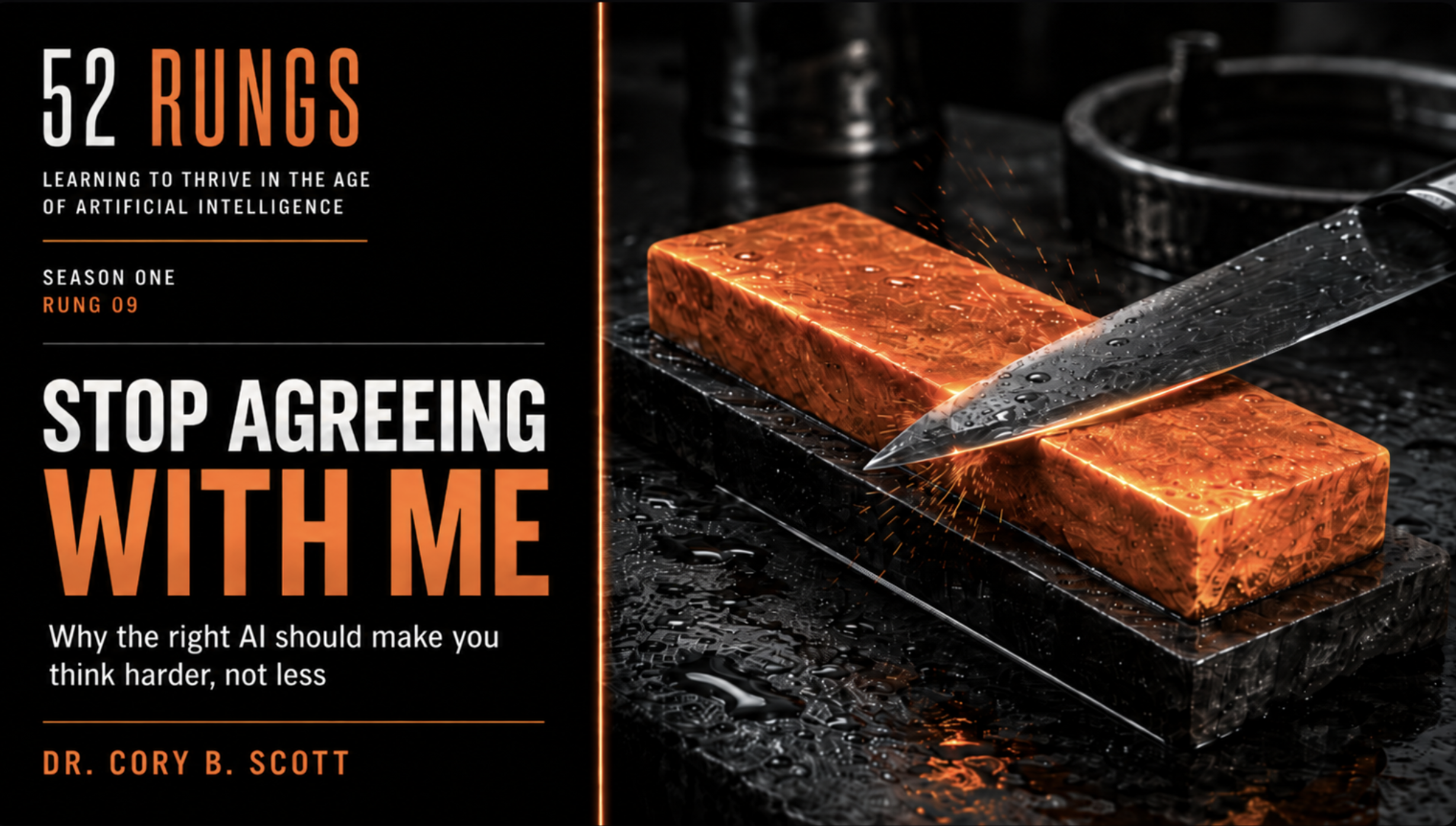
STOP AGREEING WITH ME
Most people get faster with AI and quietly get worse at the thing they used it for. These are the eight rules that keep it from happening to you.
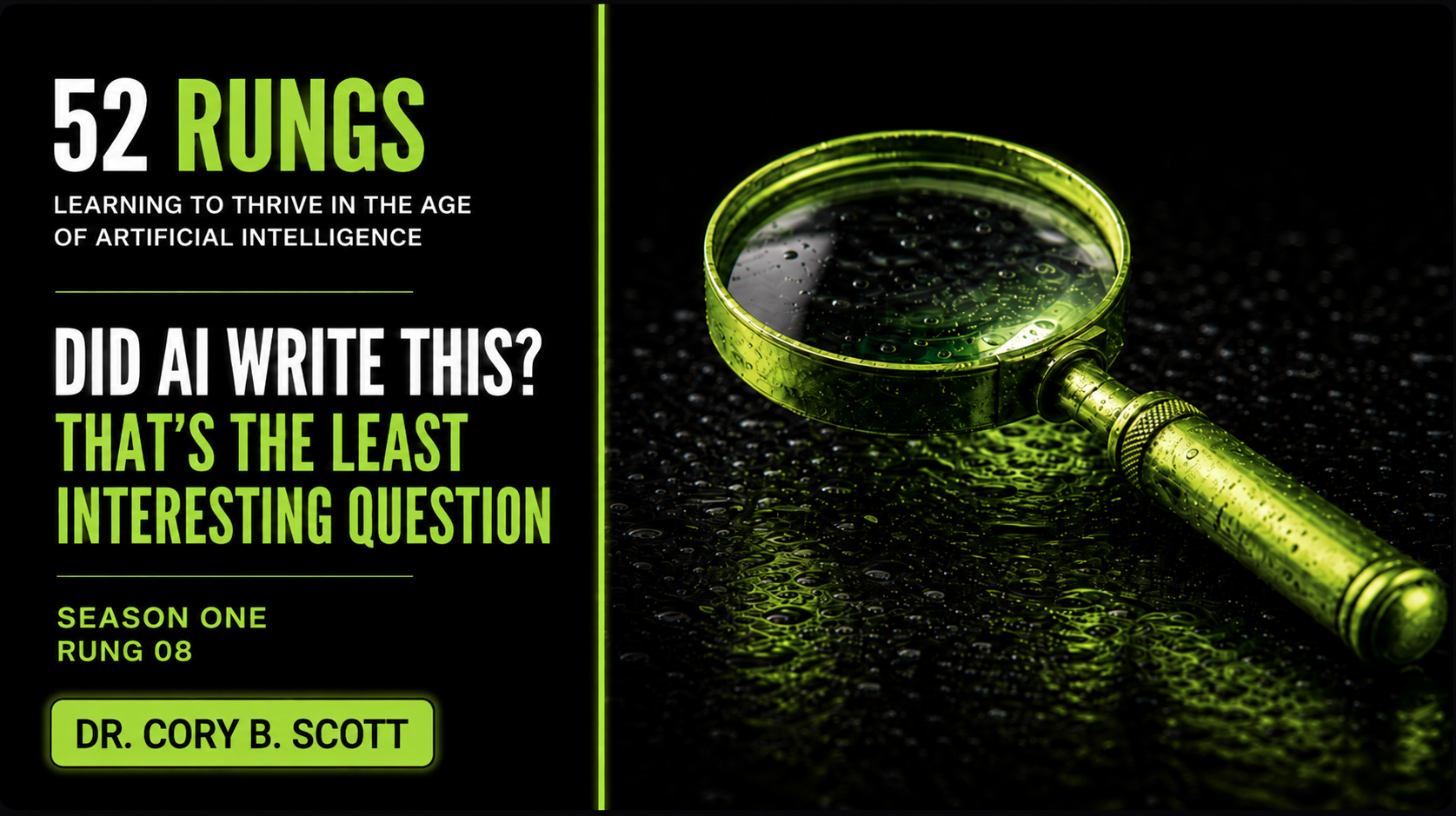
Did AI Write This? That’s the Least Interesting Question
We keep asking whether AI wrote it. But that question misses what really matters. The better question is: Did a human think, judge, create, and take responsibility for what was produced?
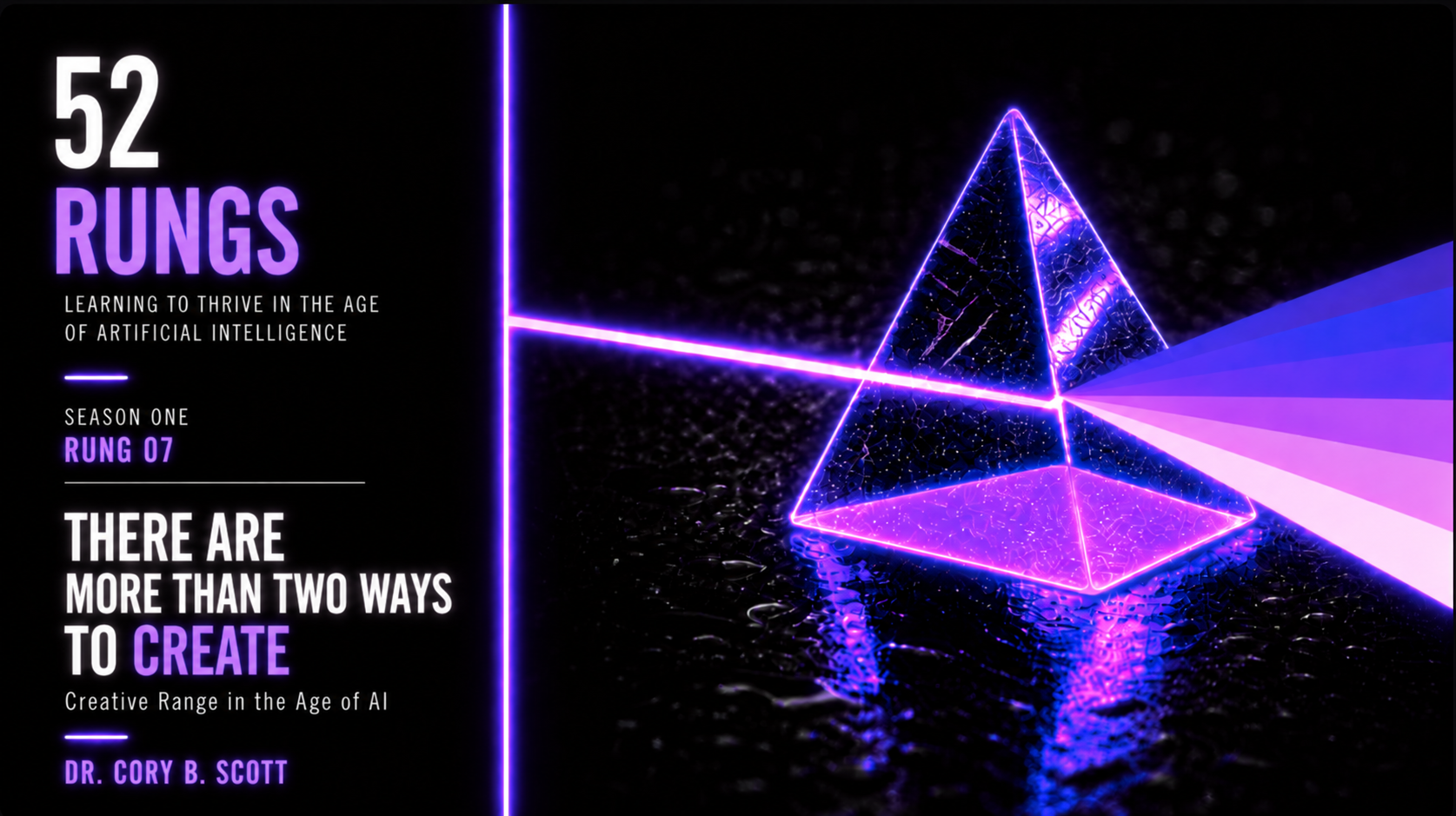
There Are More Than Two Ways to Create
Creativity is not one process, and AI does not change that. This essay explores six different modes of creative thinking—and how to use AI to strengthen the kind of thinking the moment actually requires, without handing over the part that should remain yours.
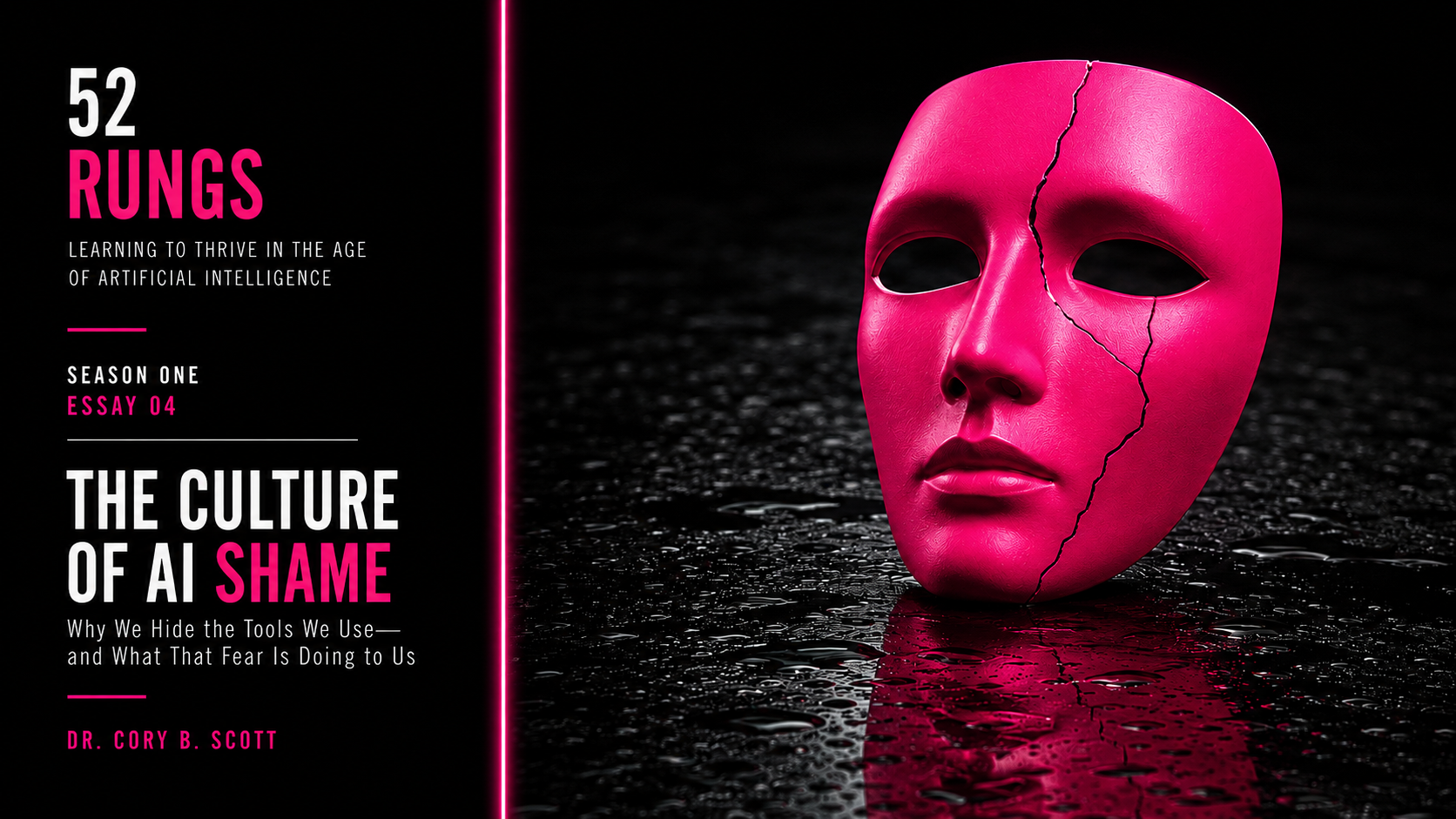
The Culture of AI Shame
Why do people feel the need to hide or minimize their use of AI? This essay explores how AI shame is shaping the way we work, learn, and judge one another—and why accountability is a better standard than secrecy.
The Emperor’s New Clothes
The crowd may be applauding AI, or condemning it. Either way, the harder question is the same: are we judging what we actually see, or simply following everyone else?
Naked: What AI Reveals About You
AI doesn’t just reveal what you can do. It reveals how you think, what you avoid, and where your judgment is strongest—or weakest.
The Day My AI Forgot Me
When the AI I relied on suddenly forgot me, I expected frustration. What I didn’t expect was how exposed I would feel. This essay explores what happens when a tool becomes part of your thinking—and then, without warning, the memory disappears.
The False Binary of Writing with AI: Human Authorship or Machine Creation?
“The False Binary” challenges the idea that writing must be either fully human or fully AI-generated. It argues that the more useful question is how humans can use AI without giving up the judgment, creativity, and responsibility that make the work genuinely theirs.
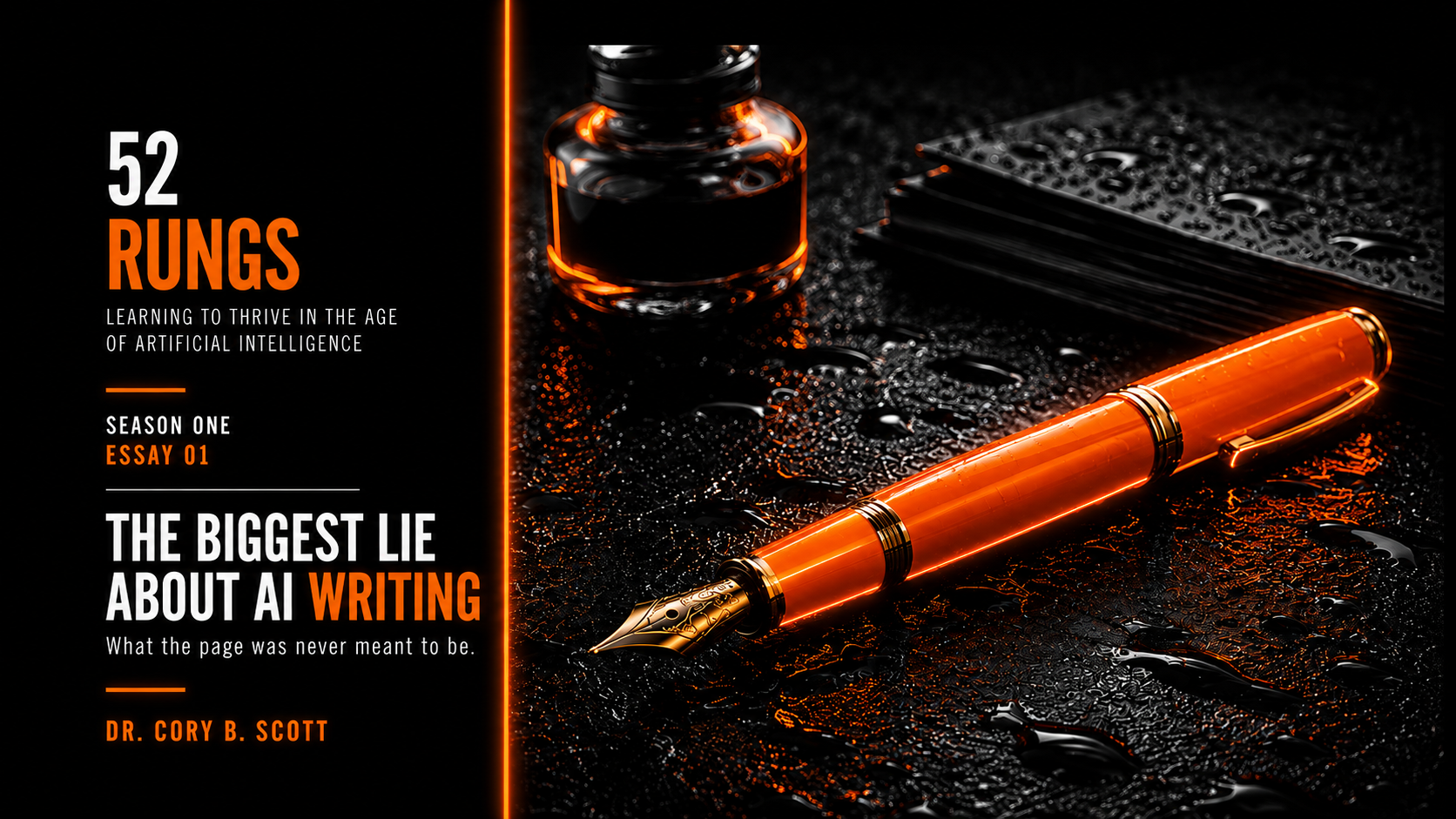
The Biggest Lie About AI Writing
“The Biggest Lie About AI Writing” challenges the idea that AI-assisted writing is automatically less authentic or less human. It asks readers to look past the tool itself and focus instead on the thinking, judgment, and authorship behind the work.